MasterChef Mid-to-Late Competition Deep Dive — Contestant Archetypes, Rankings & Techniques
When a MasterChef season passes the midpoint, the dynamics change. This deep dive examines the contestant archetypes, ranking criteria, standout dish patterns, judge feedback signals, and a home-cookable emulsification technique that defines this decisive stretch of competition.
Whether you follow MasterChef (the US edition on FOX, the UK original on BBC, or any of the international franchises), the mid-to-late phase of competition shares recognizable patterns. This article — sometimes searched as “master chef Part 31” — is a standalone analytical deep dive into what happens when the field narrows, pressure mounts, and every plate carries career-level stakes. It is not a recap of a specific episode; instead, it draws on patterns observed across multiple MasterChef seasons and franchises to explain what viewers can expect and why.
1. The Mid-to-Late Phase: What Changes and Why
Every season of MasterChef — regardless of country or franchise variant — follows a recognizable dramatic arc. The audition phase introduces personalities. The early eliminations thin out weaker cooks. The middle episodes establish frontrunners and rivalries. But it is the mid-to-late phase — roughly the final third of a season — where the competition transforms from a cooking contest into something closer to a pressure test of identity, adaptability, and mental endurance.
At this stage, the weakest cooks have already been eliminated. What remains is a field where everyone can execute at a high baseline. The judges (in the US version, that has historically included Gordon Ramsay, Aaron Sanchez, and Joe Bastianich; other franchises feature their own expert panels) begin evaluating differently. They are no longer asking “Can this person cook?” They are asking “Does this person have a culinary voice? Can they adapt under extreme time pressure? Do they have the ceiling to win?”
This shift is what makes the late-game episodes so compelling — and so unpredictable. The contestant who has been quietly competent all season suddenly needs to be brilliant. The frontrunner who has coasted on technical mastery faces a creativity challenge that exposes a blind spot. And the contestant who has survived elimination three times finds that luck is no longer enough.
2. Five Contestant Archetypes You Always See at This Stage
Across MasterChef US, MasterChef Australia, MasterChef UK, and Junior editions, the mid-to-late field almost always contains recognizable contestant archetypes. These are not about specific individuals — they are recurring patterns of competitive positioning.
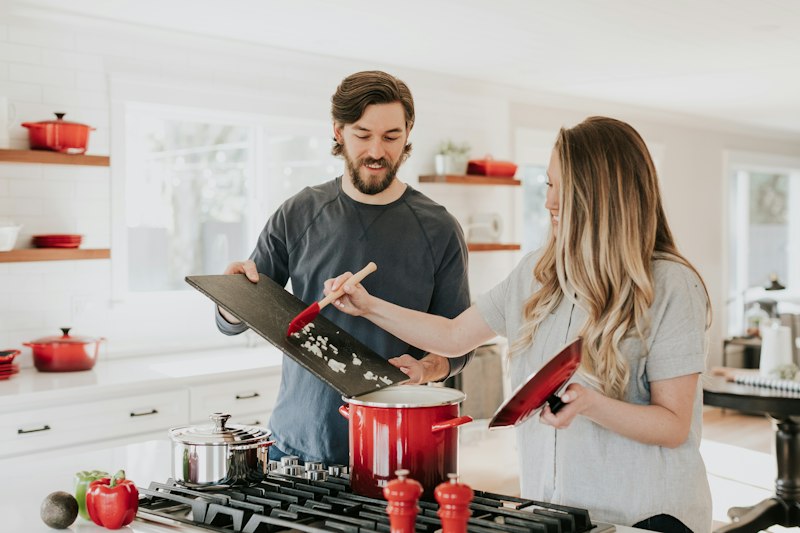
The late-game phase of MasterChef demands more than technical skill — it demands a culinary identity. Photo: Unsplash
The Consistent Frontrunner Peak Form
This contestant has been near the top of most challenge results throughout the season. They demonstrate technical mastery across challenge types — mystery boxes, pressure tests, and team challenges. In the late game, the judges’ language shifts from praise to expectation: they are no longer surprised by strong results, they demand them. The risk here is complacency or a single catastrophic misfire when the pressure peaks. Past MasterChef seasons have shown that frontrunners who coast into the finale often stumble in the final cook-off because they have never been truly pushed to their creative limits.
The Creative Risk-Taker Rising
This contestant often starts mid-pack and climbs steadily. Their willingness to pair unexpected flavors and take creative swings earns increasing trust from the judges as the season progresses. The trajectory is unmistakable: this is someone who peaks at the right time. Their risk is that bold flavor combinations can miss badly — and a single over-ambitious plate at this stage can be fatal. When these cooks connect, though, they produce the dishes that define a season.
The Quiet Professional Steady
Never flashy, rarely in the bottom, occasionally in the top. This contestant operates with calm efficiency that the judges respect but have not always been excited by. The challenge for this archetype is to find a voice — a personal culinary identity that distinguishes their food from competent cooking into memorable cooking. They have the skills. The question is whether they have the creative spark to go all the way. Many seasons see this contestant eliminated in the top-five or top-six range, not because they cannot cook, but because another contestant took a bigger swing.
The Inconsistent Talent Volatile
This contestant has some of the highest highs and lowest lows in the competition. When they nail a dish, it is genuinely exceptional. When they miss, it is often because they over-reached or lost track of time. At this stage, the judges lose patience with inconsistency. They need a clean run of two or three strong performances to reestablish credibility. The talent is undeniable; the reliability is the concern.
The Survival Artist At Risk
This contestant has survived multiple elimination rounds and has shown genuine heart. But heart alone does not win MasterChef. Their technical foundation has visible gaps, and the judges have been increasingly specific in their critiques about seasoning, timing, and ambition. They need a breakout performance immediately — not just to survive, but to prove they belong in the final tier. The margin for error is effectively zero.
3. Standout Dish Patterns: What Wins and What Fails
Every episode at this stage of a MasterChef season produces at least one plate that encapsulates a contestant’s growth. Certain patterns recur across seasons and franchises.
The Frontrunner’s Plate
The consistent frontrunner’s dishes at this stage tend to exhibit polished technique, deliberate flavor balance, and improving visual sophistication. These plates matter because they show the frontrunner is not coasting — they are still growing. Seasoning choices show restraint and intention; textural contrasts suggest a cook who is thinking about the full eating experience, not just the highlight ingredients. When a consistently strong contestant continues to improve this deep into the competition, it sends a clear message to everyone else.
The Underdog’s Breakout
The more compelling story is the mid-tier contestant who produces a dish that arguably surpasses the frontrunner’s in raw creativity. Taking a familiar ingredient and pairing it with an unexpected combination, this cook demonstrates flavor intuition that the judges reward generously. The plating may not be as polished, but the dish tells a story — it reflects the contestant’s personal culinary background and willingness to take calculated risks. This is the kind of moment that can redefine a contestant’s trajectory.
The Departing Dish
Eliminated contestants’ final dishes are often, in isolation, competent. They may be well-seasoned and visually acceptable. What they frequently lack is a point of view. At this stage, the judges are no longer satisfied with technically correct food that could have been produced by any skilled home cook. They want to see who you are as a cook. A safe dish at this stage reads as stagnation, and it is often a poignant but definitive exit.
4. Technique Spotlight: Mastering Emulsification for Pan Sauces
Why Emulsification Matters
One of the most consistently referenced skills across MasterChef episodes at every level is the ability to build a proper emulsified pan sauce — the kind of glossy, cohesive sauce that clings to protein and elevates a plate from good to exceptional. Judges across franchises frequently highlight (or critique) this technique because it reveals a cook’s understanding of temperature control, timing, and the underlying science of fat and liquid interaction. Understanding the science behind emulsification will not only make you a better viewer — it will make you a better home cook.
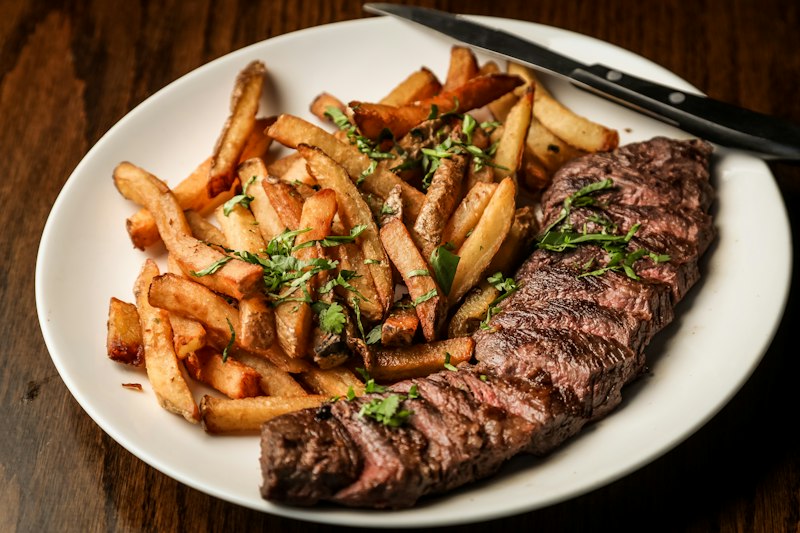
A properly emulsified pan sauce should be glossy, smooth, and cohesive — never greasy or separated. Photo: Unsplash
What Is an Emulsion?
An emulsion is a stable mixture of two liquids that normally do not combine — most commonly, fat and water-based liquids. In cooking, the most familiar emulsion is a pan sauce built from deglazed fond (the caramelized bits in a pan after searing), a liquid such as stock or wine, and cold butter whisked in gradually. The butter’s milk proteins act as emulsifiers, surrounding tiny fat droplets and suspending them in the liquid. The result is a sauce that is smooth, glossy, and unified rather than greasy or broken.
For a deeper look at the food science behind emulsions, Serious Eats offers excellent reference material on the chemistry of cooking.
Simplified Home Recipe: Classic Pan Sauce with Emulsified Butter Finish
This method works with any protein you have seared in a pan — chicken, pork, steak, or fish. It takes approximately eight minutes after your protein is cooked and resting.
- Build the fond. Sear your protein in a heavy-bottomed pan (stainless steel or cast iron) over medium-high heat with a small amount of neutral oil. Once the protein is cooked, remove it to rest. Leave the pan on the heat with all the caramelized bits intact — that is your flavor foundation.
- Reduce the aromatics. Add a small amount of finely minced shallot to the pan. Cook for 30 to 45 seconds, stirring frequently. If you like, add a teaspoon of whole grain mustard or a sprig of fresh thyme at this stage for extra complexity.
- Deglaze. Pour in approximately one-third cup of dry white wine (or stock, or a combination). Scrape the bottom of the pan vigorously with a wooden spoon to dissolve the fond. Let the liquid reduce by roughly half. This concentrates flavor and cooks off the alcohol.
- Add your base liquid. Pour in approximately one-half cup of warm stock (chicken, vegetable, or veal). Bring to a gentle simmer and reduce until the liquid coats the back of a spoon. This should take three to four minutes.
- Emulsify the butter. Remove the pan from direct heat. Add two to three tablespoons of cold, cubed butter, one or two pieces at a time, whisking or swirling the pan constantly. The cold temperature of the butter is critical — it allows the fat to be incorporated gradually rather than separating out. The sauce should turn glossy and slightly thick. If it looks greasy or separated, your pan was too hot or you added the butter too quickly.
- Season and finish. Taste the sauce. Add salt, a crack of black pepper, and a squeeze of lemon juice if desired. Strain through a fine-mesh sieve for an ultra-smooth result, or leave the shallot and herbs in for a more rustic presentation. Spoon the sauce over your rested protein and serve immediately.
Key takeaway: The difference between a broken, greasy sauce and a restaurant-quality emulsion comes down to temperature control and patience. Add the butter in small increments off direct heat, and keep the pan moving. This single technique, practiced a few times at home, will transform the way you finish weeknight proteins.
5. Power Ranking Criteria: How to Evaluate Contestant Trajectory
Power rankings in the MasterChef community are a popular way to track competitive positioning. The best rankings do not simply list who cooked the best dish in a single episode — they assess broader trajectory. Here is the framework used by experienced competition analysts.
- Cumulative performance: Where has this contestant finished across all challenges to date? A single top finish matters less than a pattern of strong results.
- Growth arc: Is the contestant demonstrably better now than in week one? Judges reward visible improvement because it signals ceiling.
- Consistency vs. volatility: A contestant who finishes third every week has a different risk profile than one who alternates between first and second-to-last. Consistency is safer; volatility can win or lose in a single cook.
- Risk-taking ability: Can this contestant execute a creative dish under pressure, or do they retreat to safe territory? As competition tightens, the ability to take and land creative risks becomes increasingly important.
- Current momentum: Which direction is the contestant trending? A strong finish in the most recent challenge(s) carries psychological weight for both the contestant and how the judges perceive them.
- Skill breadth: Has this contestant shown competence across multiple challenge types (mystery boxes, invention tests, team challenges, pressure tests), or do they have obvious weaknesses that could be exploited?
Applying these criteria consistently — rather than reacting to a single episode — gives a more accurate picture of who is actually positioned to win the competition.
6. Judge Feedback Decoded: What the Language Really Means
At the mid-to-late stage of MasterChef competition, the judges’ feedback language evolves. Early in the season, critiques are instructional — “watch your seasoning,” “let your protein rest longer.” By the mid-to-late phase, the tone shifts to evaluative. The judges are no longer teaching; they are sorting. Here is what to listen for.
Language of Concern
When a judge describes a dish as “safe,” “expected,” or “competent,” these are not compliments wrapped in politeness. At this stage, they are warnings. The judges are signaling that they need to see more — more creativity, more personal voice, more risk. A dish that might have earned praise in the third week can be a reason for elimination in the tenth week.
Language of Excitement
Conversely, when the judges use words like “bold,” “confident,” “restaurant-level,” or reference a dish as something they would serve in their own establishments, that is the highest form of praise at this stage. These phrases indicate not just that the food was good but that the cook has demonstrated the creative maturity and technical control needed to compete at the final level.
The Elimination Calculus
When the margin between two bottom dishes is thin, the judges tend to weigh three factors: (1) which cook has shown a stronger overall arc, (2) which dish better fulfilled the specific challenge brief, and (3) which contestant has demonstrated more upside potential. The contestant who goes home is almost never the one who made the worst single dish — it is the one whose overall trajectory offers the least promise going forward. Understanding this calculus helps explain decisions that might otherwise seem arbitrary or unfair to casual viewers.
7. Competition Dynamics: How the Game Shifts Past the Midpoint
There is a recognizable pattern in every season of MasterChef — US, Australia, UK, or Junior — once the field narrows past the midpoint. The dynamics shift in several important ways.
- Risk-taking accelerates. Contestants who played it safe in the early weeks begin taking bigger swings because they realize that safety is no longer rewarded. This is why some of the most exciting — and most disastrous — cooking happens in the mid-to-late episodes.
- The skill gap narrows. The weakest cooks have been eliminated. What remains is a group where everyone can cook at a high baseline. The differences become about creativity, adaptability, and mental toughness rather than raw technique.
- Time pressure intensifies. Challenge timers tend to get tighter as the season progresses, reflecting the judges’ expectation that remaining cooks can execute efficiently under pressure. A dish that would be forgiven for being slightly under-done in week four will send you home later in the season.
- Ingredient familiarity shrinks. Challenges increasingly feature unusual or high-end ingredients designed to test breadth of knowledge. A contestant who grew up cooking one cuisine will face a suddenly unfamiliar pantry, and how they adapt defines their ceiling.
- Psychological endurance matters. The cumulative fatigue of weeks of competition begins to show. Contestants who manage their energy, stay composed after setbacks, and maintain focus during long pressure tests gain a tangible advantage over equally skilled cooks who are mentally fraying.
This is the phase of the competition where narrative arcs crystallize. Frontrunners face their first real stumbles. Underdogs either break through or break down. And the viewers who have followed from the beginning start to see the shape of a possible finale.
8. Recurring Memorable Moments and Fan Reactions
Certain moments recur across MasterChef seasons that consistently generate the most viewer discussion. Here are the types that stand out.